
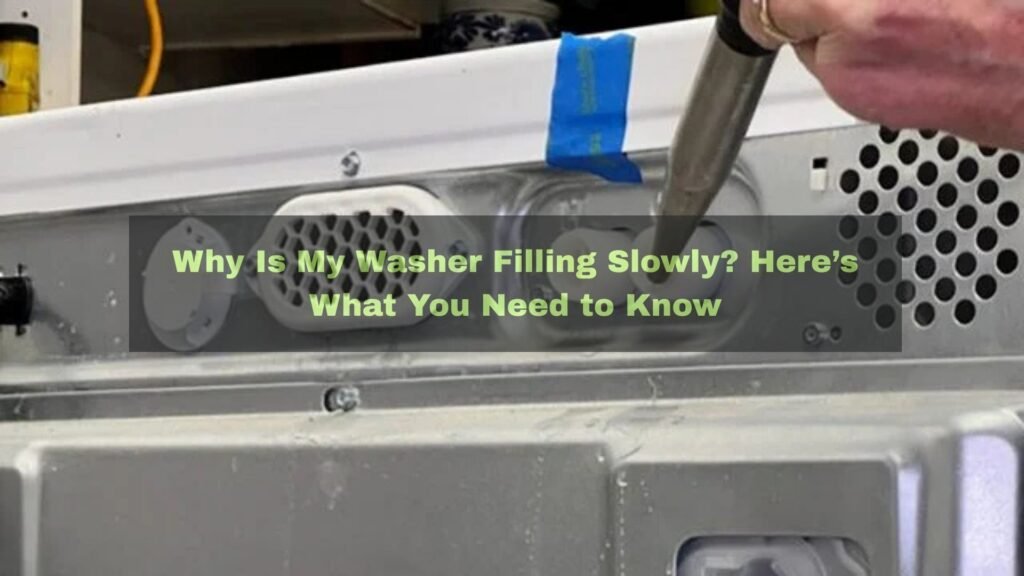
If you’ve noticed that your washing machine is filling slowly, it can be quite frustrating, especially when you’re trying to get your laundry done in a timely manner. A washing machine that takes longer than usual to fill may be caused by several issues, ranging from simple problems you can fix yourself to more complicated malfunctions that require professional attention. In this article, we’ll break down the common causes of slow water filling in washers, what signs to look for, and how to fix each issue.
1. Low Water Pressure
What It Is:
One of the primary causes of a washing machine filling slowly is low water pressure in your home. Water pressure refers to the force with which water is supplied to your home, and if it’s low, appliances like your washing machine may struggle to fill at the normal rate.
How It Affects Your Washer:
If the water pressure is weak, your washer won’t receive enough water in a timely manner, causing it to fill slowly or intermittently. This is most noticeable when you start a cycle and see the water take longer than usual to reach the desired level.
How to Diagnose It:
To check whether your home’s water pressure is the issue, you can use a water pressure gauge, which you can buy at most hardware stores. Simply attach it to a faucet and turn on the water. Ideally, the pressure should range between 40-60 psi (pounds per square inch). If it’s lower, the problem could be low water pressure.
What You Can Do:
- Check the Pressure at Other Fixtures: Turn on multiple faucets or showers in your home and check if they’re experiencing low pressure as well. If so, this confirms that the issue lies with your overall water supply.
- Increase Pressure: If the pressure is low, you might need to adjust your home’s pressure regulator or contact your water supplier to fix it. Alternatively, consider installing a booster pump to increase pressure.
2. Clogged Water Inlet Valve
What It Is:
The water inlet valve is a crucial component of your washing machine that controls the flow of water into the machine. Over time, mineral buildup, debris, or sediment can clog this valve, which restricts water flow and causes slow filling.
How It Affects Your Washer:
A clogged inlet valve can significantly reduce the flow of water into the washer, causing it to fill slowly. In some cases, the valve may still open partially, allowing water to trickle in, but at a much slower rate than normal.
How to Diagnose It:
If you notice that the washer is taking longer than usual to fill, or the water flow seems weak, it’s a good indication that the water inlet valve may be clogged. You can inspect the valve for signs of buildup or debris.
What You Can Do:
- Clean the Inlet Valve: Unplug the washing machine, and turn off the water supply. The inlet valve is typically located where the water hoses connect to the machine. You can remove any debris or buildup with a soft brush or cloth.
- Check the Screens: Most washers have mesh screens at the inlet valve that can trap sediment. Clean or replace these screens to ensure the water flows freely.
- Replace the Valve: If cleaning the valve doesn’t work or it appears damaged, it may need to be replaced. You can purchase a new water inlet valve from an appliance store or online.
3. Kinked or Blocked Hose
What It Is:
The hoses that carry water into your washing machine play a direct role in the water flow. If these hoses are kinked, bent, or blocked, they can restrict the flow of water, causing your washer to fill slowly.
How It Affects Your Washer:
When a hose is blocked or kinked, water cannot travel through it efficiently. Even a small obstruction can drastically reduce the flow, leading to slow filling times.
How to Diagnose It:
Visually inspect the hoses connected to the back of your washing machine. Look for any kinks, sharp bends, or signs of wear. If the hose is bent in an awkward way, water flow may be restricted.
What You Can Do:
- Straighten the Hoses: If you find any kinks or bends, carefully straighten the hoses. Make sure they’re not twisted or pinched against the wall.
- Clear Any Blockages: If the hose is clogged with debris, disconnect it from the washer and clear out any blockages. Run water through the hose to make sure it’s completely free of obstructions.
- Replace the Hose: If the hose is damaged or worn, it may need to be replaced. You can purchase a new hose and easily install it yourself.
4. Dirty or Clogged Filter
What It Is:
Many washing machines have a filter located where the water hose connects to the machine. This filter is designed to catch any debris or sediment that might be in the water supply. Over time, the filter can become clogged, reducing water flow and causing slow filling.
How It Affects Your Washer:
If the filter is clogged, it can prevent water from flowing freely into the machine. As a result, the washer may take longer to fill, or the water may only flow in intermittently.
How to Diagnose It:
You may notice that your washing machine takes a longer time to fill, and the water flow seems weak. If you’ve already checked the water inlet valve and hoses, the filter may be the next component to inspect.
What You Can Do:
- Locate and Clean the Filter: The filter is often found at the point where the water hoses connect to the washer. Refer to your machine’s manual to locate it. Once found, remove the filter and clean it thoroughly with warm water to remove any debris.
- Replace the Filter: If cleaning doesn’t solve the issue or if the filter is damaged, you may need to replace it. Filters are generally inexpensive and can be purchased from most appliance retailers.
5. Faulty Water Inlet Valve
What It Is:
If the water inlet valve itself is malfunctioning, it may not be able to open properly, which can prevent the washer from filling with water efficiently. This is different from a clogged valve because the valve itself may be damaged or defective.
How It Affects Your Washer:
A faulty water inlet valve may open partially or fail to open entirely, leading to slow filling. In some cases, the valve might still appear functional, but it isn’t allowing enough water to flow into the machine.
How to Diagnose It:
If you’ve checked the water pressure, hoses, filters, and valve screens and your washer is still filling slowly, it’s possible that the valve itself is faulty. You may hear unusual sounds or notice that the valve doesn’t open fully when the washing cycle begins.
What You Can Do:
- Test the Valve: You can test the valve with a multimeter to check for electrical continuity. If there’s no continuity, the valve needs to be replaced.
- Replace the Valve: If the valve is faulty, it will need to be replaced. It’s a relatively simple fix that can be done by most homeowners, but if you’re unsure, it’s always a good idea to consult a professional.
6. Washer’s Internal Components
What It Is:
Sometimes, the issue might not lie with the components that are easy to inspect, but with the internal electronics or solenoid mechanisms that control the water flow. A malfunction in the washer’s control board or solenoid could cause improper water flow, even if all the external parts seem fine.
How It Affects Your Washer:
Malfunctions in the internal components can cause erratic behavior, such as slow filling times, incomplete cycles, or water not filling at all. This is usually the last resort when all other potential issues have been ruled out.
What You Can Do:
- Consult a Technician: If you’ve tried all the basic fixes and the washer still fills slowly, it may be time to call in a professional appliance repair technician. They can diagnose and repair any internal issues with the washer’s control board or solenoid.
Conclusion
A washing machine filling slowly is often caused by one or more of the issues mentioned above. The good news is that many of these problems are relatively simple to diagnose and fix. Start with checking the basics, such as water pressure, hoses, and filters, and move on to more complex issues if necessary. If you’re still experiencing issues after trying these solutions, it might be time to consult a professional. Keeping your washer well-maintained can help prevent these problems from arising in the future, ensuring your laundry day goes smoothly.